
When the emergency response ends, the leadership work is just beginning. The cameras leave, the volunteers thin out, and the people who remain — claims teams, relief coordinators, pastors, community leaders — are left holding a long recovery. What steadies people in that stretch is rarely a perfect plan. It is clear communication, calm presence, and coordination that keeps everyone pulling in the same direction.
- Communicate early, often, and honestly — including what you do not know yet.
- Keep one source of truth so people are not stitching together rumors.
- Presence steadies people more than answers do.
- Give every role a clear owner and a single point of contact.
- Care for the responders, because they are affected too.
Communicate: early, often, and honestly
In the absence of information, people fill the gap themselves — usually with the worst version. Communicate early, before you have every answer. Say what you know, what you do not know yet, and when you will update. Then update when you said you would.
- One source of truth. A single channel or person people can rely on, so updates do not compete with each other.
- Plain language. Stressed people cannot parse jargon or long paragraphs.
- Repeat the essentials. What feels repetitive to you is often the first time someone actually heard it.
Calm: presence over answers
A leader’s tone travels through a team faster than any message. You do not need to have every answer to be steadying; you need to be present, honest, and consistent. Small routines — a daily check-in at the same time, a predictable update rhythm — return a sense of control to people who have lost a great deal of it.
Coordinate: clear roles, shared status
After a disaster, many groups arrive to help at once: claims organizations, agencies, faith communities, volunteer networks, contractors. Without coordination, effort duplicates in some places and disappears in others.
- Give every role an owner and make it visible who that is.
- Use a single point of contact for each partner organization.
- Share status openly so each group can see where the gaps are.
Care for the people doing the caring
Responders, adjusters, and volunteers absorb other people’s worst weeks, often while carrying their own losses. Plan rotation and rest. Hold short debriefs. Watch for the signs of strain — irritability, withdrawal, exhaustion — and treat them as signals rather than failures. A team that is cared for can keep caring for others.
Lead for the long tail
Recovery outlasts attention. Weeks and months after the event, the claims are still open, the rebuilding is slow, and grief arrives on its own schedule. The leaders who matter most are often the ones still there in week six. Plan for that stretch from the beginning, and say out loud that you will be there for it.
Questions
What should leaders communicate right after a disaster?
Communicate early and honestly: what you know, what you do not know yet, and when the next update will come. Use one trusted source of information, plain language, and a predictable update rhythm.
How can leaders support responders and volunteers after a disaster?
Plan rotation and rest in advance, hold short regular debriefs, watch for signs of strain such as exhaustion or withdrawal, and treat those signs as signals to act on rather than as personal failures.
How long does leadership after a disaster last?
Far longer than the emergency response. Claims, rebuilding, and recovery continue for weeks and months after public attention moves on, so leaders should plan for that long tail from the start.
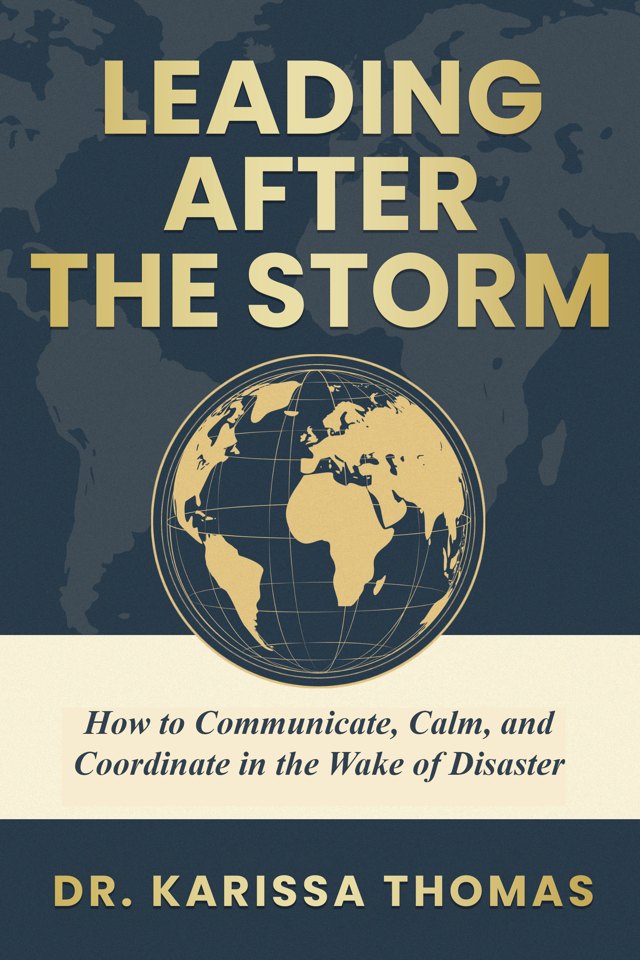
Leading After the Storm
How to communicate, calm, and coordinate in the wake of disaster. A #1 New Release in Risk Management, and book two of the Storm Line.