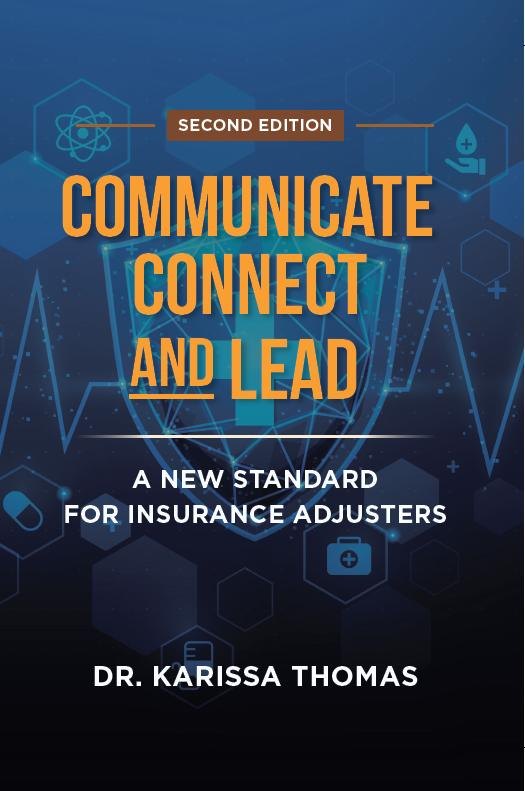
We’d rather show you the numbers than sell you a book.
Everything Efficient Adjuster™ teaches rests on a claim that can be checked: the human half of claims handling is measurable, it is expensive when it goes wrong, and almost nobody trains for it.
Here is the data. Including the part that cuts against us.
Communication more than doubles claims satisfaction. It is not a soft skill. It is the lever.
J.D. Power surveyed 5,178 homeowners who had filed a claim. Then they split them by one variable: how easy it was to communicate with their insurer.
The failure points J.D. Power identified are not technical. They are: having to leave voicemails, having to call repeatedly with the same question, and not getting a timely follow-up. 82% of customers said they were routinely being contacted through a channel they had not asked for.
Source: J.D. Power 2025 U.S. Property Claims Satisfaction Study, 5,178 respondents.
The longest since the study began in 2008. Cycle time from filing to finished repairs is now 32.4 days. Every one of those days is a day the policyholder is waiting on a person to tell them something.
J.D. Power ranks the eight dimensions of the claims experience by importance. The top four are fairness of settlement, level of trust, time to settle, and people. Digital tools come fifth.
Even in a quieter catastrophe year, with faster cycle times and better digital tools, roughly 19% of claimants report a poor experience. The technology got better. The gap did not close.
The litigation environment stopped being someone else’s problem.
Every note, photograph, and decision in a claim file is now written into an environment where the downside has moved sharply against the carrier — and the person writing it is often the least experienced person on the claim.
135 lawsuits against corporate defendants produced verdicts of $10M or more — the highest count since tracking began in 2009.
A 116% increase on the prior year. Verdicts above $100M rose 81.5% to 49 cases; five exceeded $1bn.
Litigation is now an asset class with institutional capital behind it. That capital lengthens timelines and raises settlement demands — against files your adjusters wrote.
What this means at the desk. Litigation awareness can no longer begin when a dispute arises. It has to begin at first notice of loss — in how the file is documented, how the decision is explained, and whether the record can be defended by somebody who was never there. That is what Lead the Claim is about, and it is the first thing we deploy into a roster.
Claims is where the green people go. And nobody built the bench.
Claims is second only to operations as the place carriers put brand-new people — into the most emotionally demanding, most legally exposed job in the building.
The Jacobson Group’s own assessment: many claims organisations “have not focused on backfilling a bench of emerging talent” against an ageing population.
The gap, stated plainly
You are hiring inexperienced people into the hardest human job in insurance, and promoting your best technicians to lead them.
Neither group has been trained for what you are actually asking them to do. The first group is asked to hold a stranger’s worst day steady and produce a defensible record while doing it. The second is asked to lead people, having been selected purely on their ability to work files alone.
Technical training does not touch either problem. It was never designed to.
The industry is not bleeding people. We are not going to pretend it is.
Twelve-month voluntary turnover across insurance carriers fell to 8.1%. Forty-three percent of carriers plan to hold headcount steady in 2026 — a fifteen-year high. Retention is improving, not collapsing.
Source: Jacobson Group / Aon, Q1 2026 Insurance Labor Market Study
If someone tells you the industry is in a retention crisis and sells you a retention product, check their numbers. Ours say otherwise.
The real problem is narrower, and worse. It is not how many people leave. It is who is left, who is leading them, and what the files look like when they do. A stable headcount full of undertrained adjusters and untrained managers is not a healthy claims operation. It is a quiet one.
The State of Claims Leadership 2026
The data above is everyone’s. It tells you the outcome — satisfaction, verdicts, headcount. It tells you nothing about the cause, because nobody has asked.
So we are asking. We’re surveying claims professionals across carriers, TPAs, and independent firms on what they were actually trained for, what they were promoted on, and what nobody prepared them for.
Everyone who takes part gets the full findings before publication. Ten minutes, anonymous, no sales follow-up.
Check us.
Every figure on this page is public, dated, and linked. If we get something wrong, tell us and we will correct it.
- J.D. Power, 2025 U.S. Property Claims Satisfaction Study — 5,178 homeowners who filed a claim in the prior nine months.
- J.D. Power, 2026 U.S. Property Claims Satisfaction Study — 5,093 respondents.
- Marathon Strategies, 2025 nuclear verdicts report, as reported by Zurich and industry analysts.
- Westfleet Advisors, Litigation Finance Report, and published projections for third-party litigation funding.
- The Jacobson Group and Aon, Q1 2026 Semi-Annual U.S. Insurance Labor Market Study — 17th year.
- The Jacobson Group, on claims workforce demographics, CLM Magazine.
A note on what we don’t claim. None of the studies above measured Efficient Adjuster™. They establish that the problem is real and expensive. They do not prove that our programs fix it — that evidence comes from pre/post assessment inside client engagements, and we will publish it when we have enough of it to be worth reading. We would rather tell you that than imply otherwise.
Read one book, or book twenty minutes.
Both are cheap. One costs you the price of lunch. The other costs you a slot in your calendar. Neither commits you to anything.