A quiet storm season? Use it to build. See the Calm Season plan
Catastrophe & crisis

The storm is the easy part.

Everyone knows what to do while the wind is blowing. What nobody prepares for is the ninety days afterwards — the exhaustion, the anger, the people who were steady in week one and are breaking in week six.

Two books on crisis leadership, written from disaster work across more than a dozen regions. Leading After the Storm has been out since 2025. Leading Before the Storm — the one that should have come first — is the new release.

#1 Risk Management · 2025 & 2026
Who these books are for

Written for anyone holding people steady after the worst day.

These are books on crisis leadership, drawn from disaster patterns across more than a dozen regions — North America, Latin America, Sub-Saharan Africa, the Caribbean, South Asia, East Asia, Southeast Asia, the Gulf States, Central Asia, the Arctic Circle, Europe, and the Pacific. The cases come from educators, healthcare teams, NGO responders, faith leaders, grassroots organisers, and community leaders who carry the weight of recovery long after a crisis leaves the headlines.

The person who steadies a community after a disaster is rarely a government official or a crisis manager. It is a school principal, a volunteer, a neighbourhood elder, a nurse — someone affected who is still willing to act.

Leading Before the Storm
Published 2026 · Book one
2026 New Release

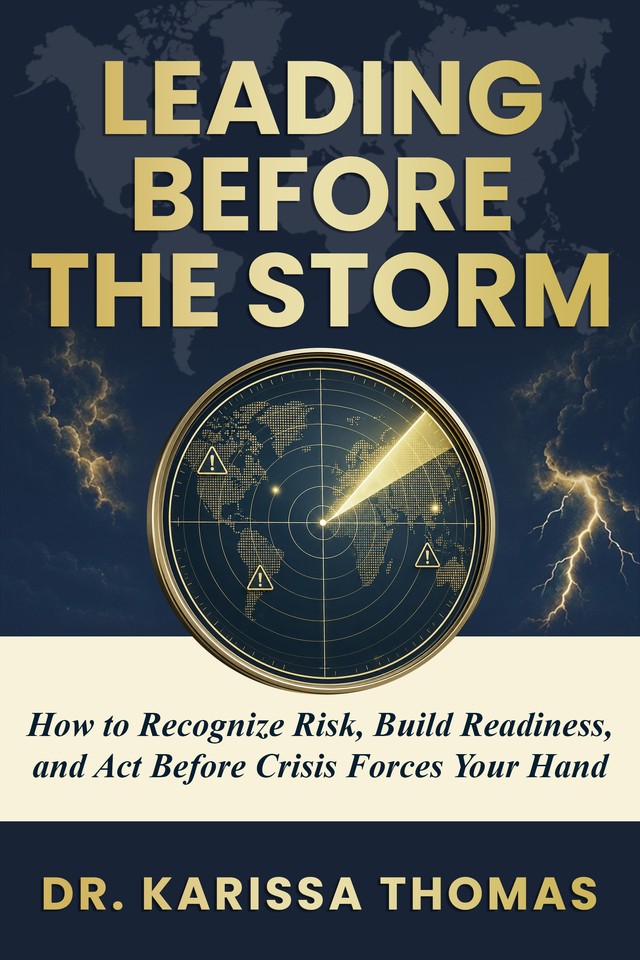
Leading Before the Storm

The one that should have come first. Early signals, the places systems break first, and everything an organisation should have decided, staffed, documented, and said out loud before the pressure is visible — because by the time a situation is called a crisis, most of the outcome has already been shaped.

HardcoverPaperbackKindle
Buy on Amazon Instructor Companion available →
Leading After the Storm
Published 2025 · Book two
#1 Risk Management · 2025 & 2026

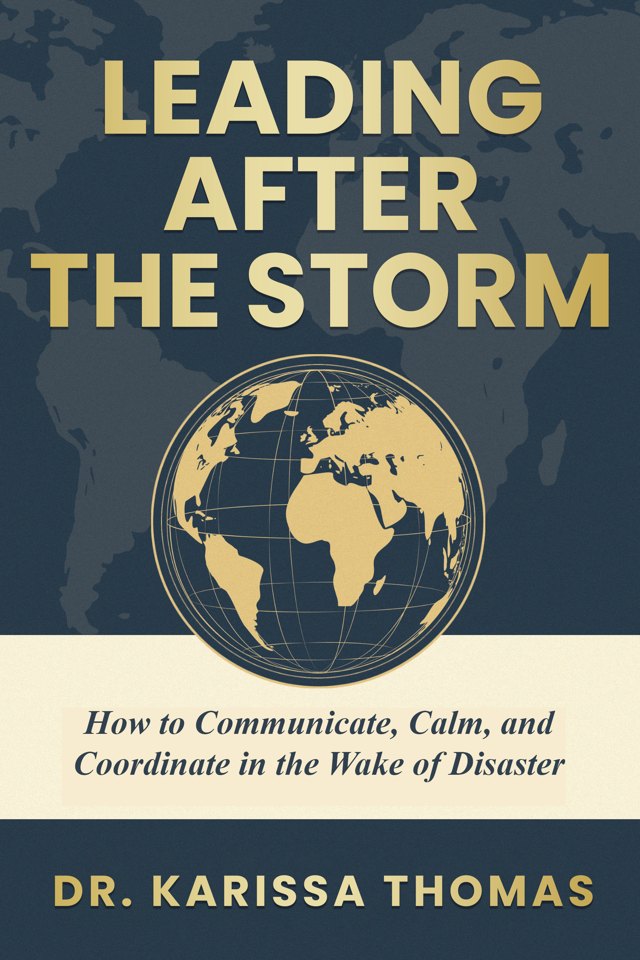
Leading After the Storm

How to communicate, calm, and coordinate in the wake of disaster. Drawn from disaster leadership across more than a dozen regions, with cases from Puerto Rico to Kerala to the Eastern Cape — the leadership work that begins when the response ends and everybody else has gone home.

HardcoverPaperbackKindle
Buy on Amazon Instructor Companion available →
Who reads these

Anybody who has to hold people steady after the worst day.

Community and faith leaders

The leaders without titles. The elder who gathers the displaced, the faith leader who listens, the neighbour who picks up the phone. Recovery holds because someone chose to stay steady, and that work is rarely anyone’s job description.

Educators and school leaders

Schools reopen before the community has recovered. Principals and teachers carry disrupted terms, grieving students, and staff who are holding it together in public and coming apart in private.

NGO, relief and emergency management

Aid workers, volunteer networks, shelter and displacement teams, agencies coordinating a response. The logistics are planned for. The ninety days after the emergency teams leave are not.

Claims and catastrophe teams

Claims is one seat at the table after a disaster, and these books are written for the whole table. For adjusters and the firms staffing a surge, the human half of deployment is the part nobody trains for.

The perfect primer for my new path. It strengthened my resolve and reminded me of my purpose — to lead with compassion, empathy, and presence.

Disaster Response CoordinatorFlorida United Methodist Conference

The best book on crisis response in the current moment — realistic, compassionate, and deeply practical.

Verified readerLeading After the Storm
Selected Indie Author — Tucson Festival of Books, University of Arizona, 2026. Leading After the Storm sold copies on site. It has now topped Amazon’s Risk Management category two years running — #1 New Release in 2025, #1 Best Seller in 2026.
Run it as a group study

Lead your people through it together.

Congregations and conferences, schools and districts, volunteer relief networks, emergency-management teams, and claims rosters run the Storm Line as a book study. Each book has an Instructor Companion with session outlines, discussion questions, slides, and a participant certificate.

Already under way: a 100-person study of Leading After the Storm begins this October.

Read: A pre-season readiness checklist · Leading people after a disaster

A natural sequence

Before the pressure: Leading Before the Storm — recognize risk, build readiness, decide in advance.

After the response: Leading After the Storm — communicate, calm, and coordinate through recovery.

Choose four or five sessions (one per Part), eight sessions, a semester, or a single workshop day. In person, virtual, or both.
For firms

Pre-season is where this gets bought.

Books do not prepare a roster. A session does. We run pre-deployment readiness sessions for CAT teams: the conversations, the documentation standards, and an honest briefing on what the next ninety days will do to your people.

It is July. Your roster is already out there. If last season’s return rate was not what you wanted, the fix starts now. Not in November.

Leading the Surge

A keynote and a pre-season intensive on catastrophe leadership: staffing a surge, holding a team together through it, and what deployment does to the people who do it.

Built for CAT rosters, IA firms, and deployment leaders.

See the session →
Two ways to start

Read one book, or book twenty minutes.

Both are cheap. One costs you the price of lunch. The other costs you a slot in your calendar. Neither commits you to anything.

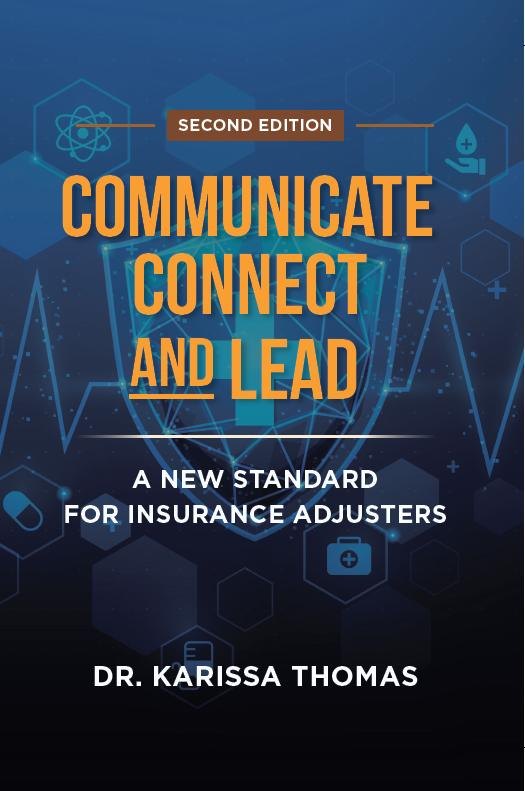
Communicate, Connect, and Lead Lead the Claim Claim the Lead