By the time a claim is contested, the conditions that made it contestable are usually already in the file. Most escalation does not begin at the point of dispute. It begins earlier — in the documentation, in the communication, and in the gaps between what one party understood and what another assumed.
The environment changed before the process did
Claims are no longer defined by a predictable process or a single line of evaluation. They are shaped by catastrophe events, multi-party coordination, regulatory expectations, and increasing scrutiny. What was once a structured workflow has become a dynamic environment where conditions change quickly and expectations continue to rise.
In this environment, the role of the adjuster has evolved. Adjusters are no longer only responsible for inspecting damage and documenting findings. They are responsible for guiding the claim forward — through uncertainty, complexity, and pressure. That requires more than technical skill. It requires clarity in documentation, discipline in communication, and consistency in decision-making across every stage of the claim.
Where escalation actually begins
Many of the challenges seen today do not begin at the point of dispute. They begin earlier in the process. Unclear documentation, inconsistent communication, and gaps in alignment create friction. That friction slows claims, increases rework, and contributes to escalation. Over time, these patterns affect performance at the organizational level.
The dispute is where the problem surfaces. It is rarely where the problem started.
Three friction points that show up later as escalation
- Documentation that records the outcome but not the reasoning. A file that says what was decided, without what it was based on, cannot defend itself months later — and often cannot be picked up cleanly by the next person who touches it.
- Communication that varies by stakeholder. When the insured, the carrier, and the vendor each carry a slightly different understanding of where the claim stands, the gap eventually has to be resolved — usually under pressure, and usually by someone who wasn’t there.
- Standards that hold when it’s calm and slip when it isn’t. Consistency that only survives normal volume isn’t consistency. Catastrophe conditions expose it immediately.
Why catastrophe conditions expose it fastest
Catastrophe events introduce volume, multi-party coordination, regulatory expectations, and scrutiny at the same time. A process that depends on individual memory, individual judgment, or individual availability will hold in normal conditions and fail in these. Not because the people are weaker, but because the system was carrying more than it was built to carry.
This is not a problem limited to litigation, catastrophe response, or operational efficiency in isolation. It is about how these elements intersect, and how claims professionals operate effectively when all of them are present at once.
What this means for the file you’re working right now
Expectations have changed. The ability to move a claim forward now depends on how well information is documented, how clearly decisions are communicated, and how consistently expectations are maintained across stakeholders. These are no longer secondary skills. They are central to the role.
The practical version is simple to state and harder to hold:
- Document the reasoning, not just the result. The decision matters less than the basis for it.
- Communicate the same status to every party. Alignment is not a courtesy; it is a defense.
- Keep the standard identical whether the file is routine or contested — because you will not know in advance which one it is.
Claims handling is moving toward a standard where clarity, alignment, and defensibility are built in from the first touch rather than reconstructed at the point of dispute.
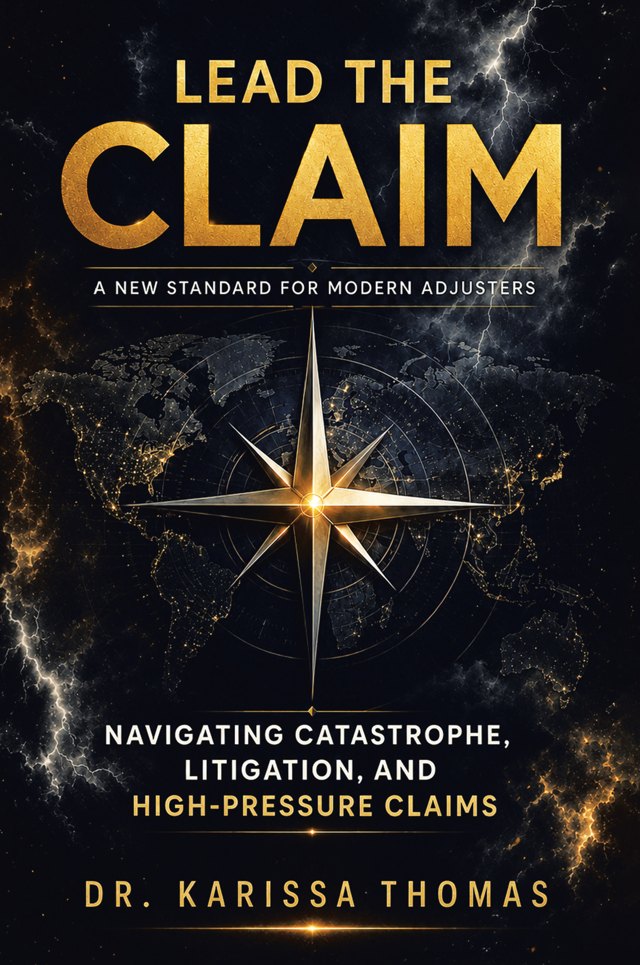
Lead the Claim
A structured approach to documentation, communication, and claim progression that supports clarity, alignment, and defensibility — built for catastrophe claims, multi-party situations, and high-pressure conditions.